Person with VR Headset

The Challenge & Process

Most reading apps still optimize for shelves, ratings, and yearly challenges. Wellness apps track meditation and sleep—but leave reading out, even though readers already describe books as regulation, escape, and recovery. For ADHD readers especially, the gap is sharper: attention comes in bursts, guilt fills the gaps, and generic timers don’t help.

My goal was to reframe reading as a measurable self-care practice: session-based, body-aware, and designed for real attention patterns—not another Goodreads alternative.

I interviewed aspirational readers, ADHD readers, and wellness-oriented readers who already use Calm/Headspace-style tools. A few themes held across conversations:

  • Reading guilt is the default. Volume-based gamification (books/year, aggressive streaks) often makes it worse.

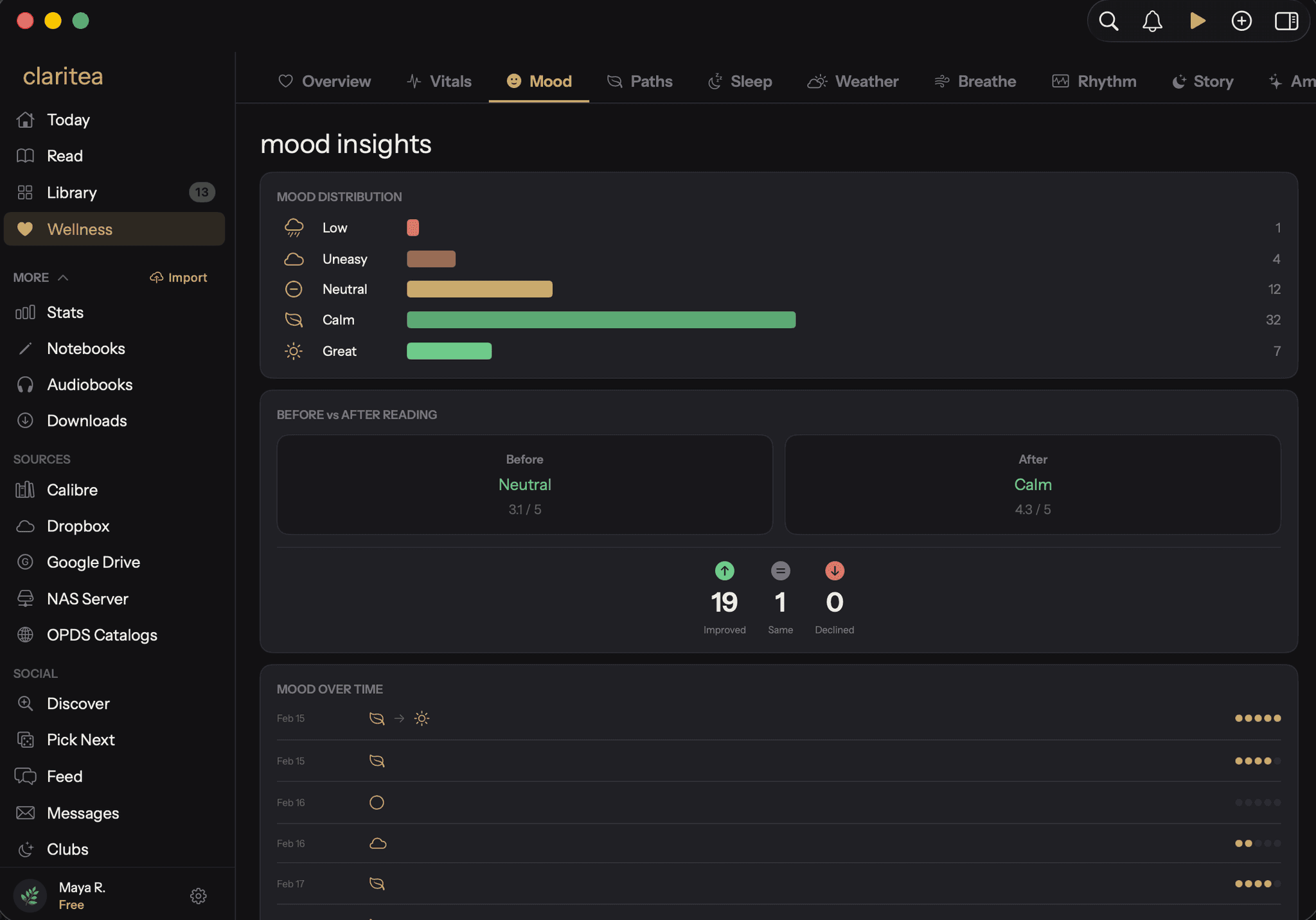
  • Proof motivates more than advice. Seeing heart-rate / calm signals after a session made the value feel real—not abstract.

  • ADHD support is almost nonexistent in reading products: no gentle check-ins, no pacing, no graceful exit when focus breaks.

  • Social accountability works in small doses—clubs and buddy reads—more than public performance feeds.

Competitive work confirmed the white space: trackers (Bookly, Basmo) capture minutes; social apps (Fable, Goodreads) capture community; wellness apps ignore books entirely. Nothing sat at the intersection of session tracking + biometric wellness + ADHD-first UX.

From that, I set design principles I used as a filter for every screen: reading as self-care (not homework); ADHD-first as universal design; show the body’s response instead of lecturing; intimate social over broadcast; and a dark, warm, quiet visual system—lamplight, not productivity dashboard.

I prototyped the core experience in a high-fidelity interactive HTML prototype (navigation, session flow, spoiler states, Focus Score reveal), then implemented the product in React Native (Expo) with a shared Supabase backend and a native SwiftUI Mac companion—so the case study isn’t only screens, it’s a working system.

The Challenge & Process

Most reading apps still optimize for shelves, ratings, and yearly challenges. Wellness apps track meditation and sleep—but leave reading out, even though readers already describe books as regulation, escape, and recovery. For ADHD readers especially, the gap is sharper: attention comes in bursts, guilt fills the gaps, and generic timers don’t help.

My goal was to reframe reading as a measurable self-care practice: session-based, body-aware, and designed for real attention patterns—not another Goodreads alternative.

I interviewed aspirational readers, ADHD readers, and wellness-oriented readers who already use Calm/Headspace-style tools. A few themes held across conversations:

  • Reading guilt is the default. Volume-based gamification (books/year, aggressive streaks) often makes it worse.

  • Proof motivates more than advice. Seeing heart-rate / calm signals after a session made the value feel real—not abstract.

  • ADHD support is almost nonexistent in reading products: no gentle check-ins, no pacing, no graceful exit when focus breaks.

  • Social accountability works in small doses—clubs and buddy reads—more than public performance feeds.

Competitive work confirmed the white space: trackers (Bookly, Basmo) capture minutes; social apps (Fable, Goodreads) capture community; wellness apps ignore books entirely. Nothing sat at the intersection of session tracking + biometric wellness + ADHD-first UX.

From that, I set design principles I used as a filter for every screen: reading as self-care (not homework); ADHD-first as universal design; show the body’s response instead of lecturing; intimate social over broadcast; and a dark, warm, quiet visual system—lamplight, not productivity dashboard.

I prototyped the core experience in a high-fidelity interactive HTML prototype (navigation, session flow, spoiler states, Focus Score reveal), then implemented the product in React Native (Expo) with a shared Supabase backend and a native SwiftUI Mac companion—so the case study isn’t only screens, it’s a working system.

The Solution & Impact

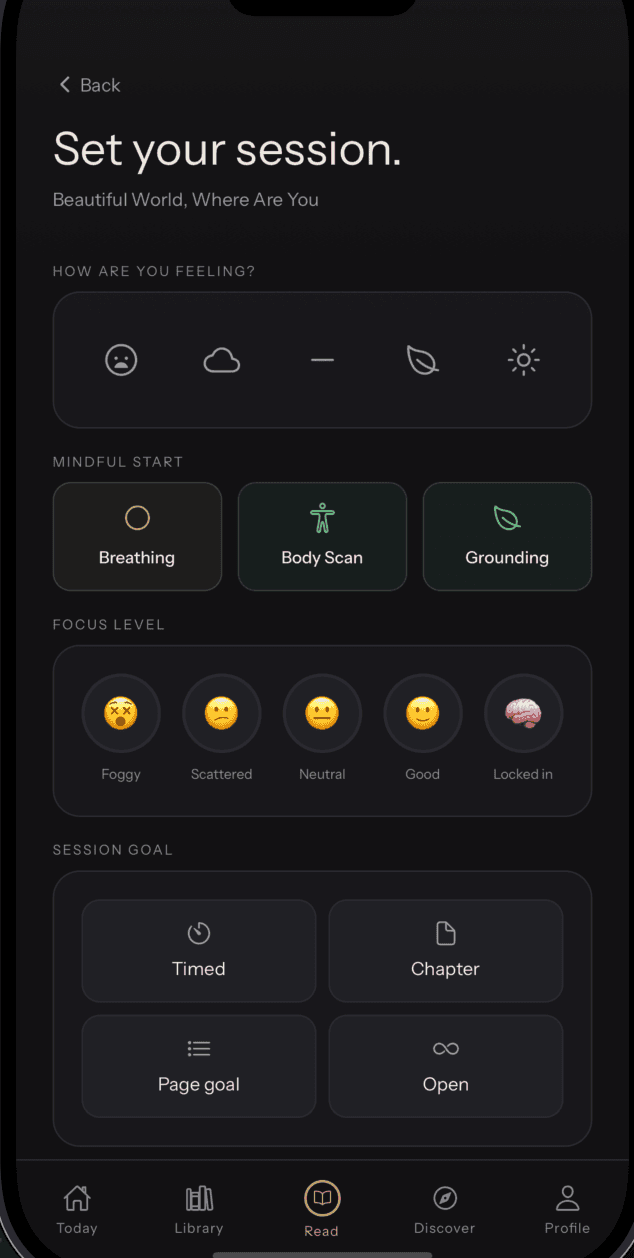
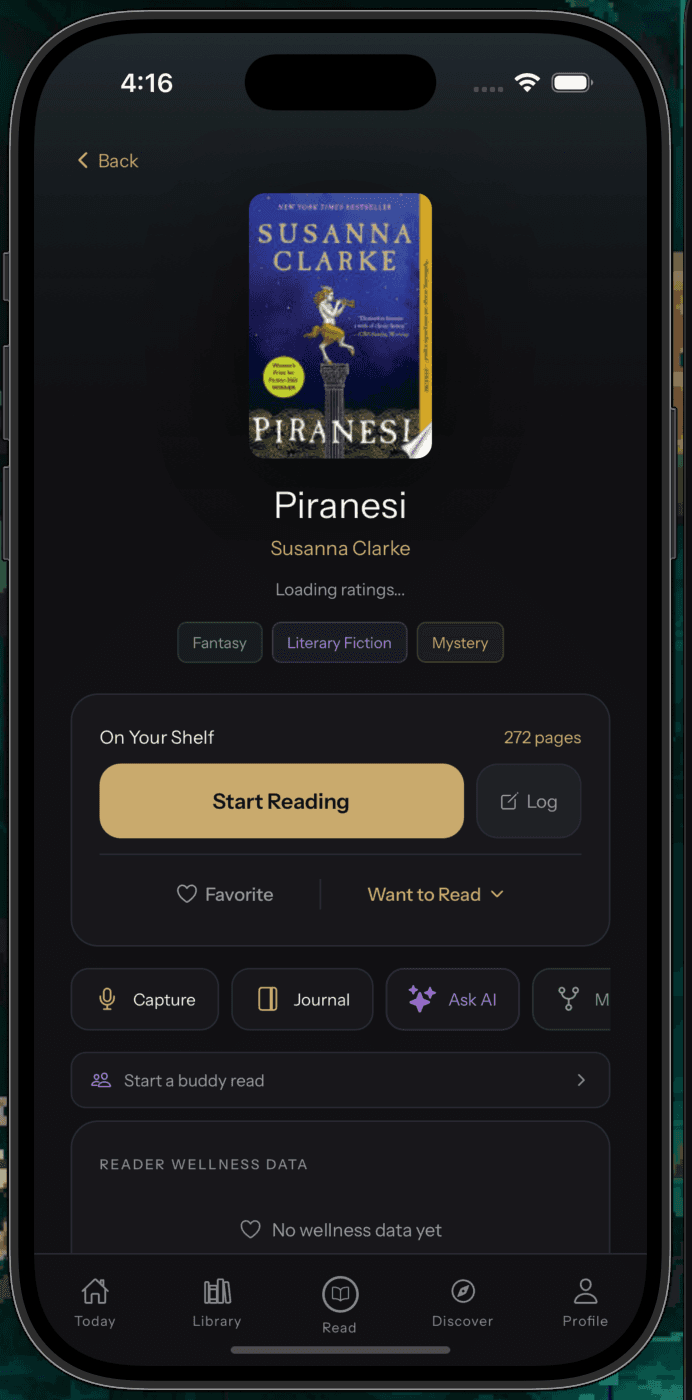
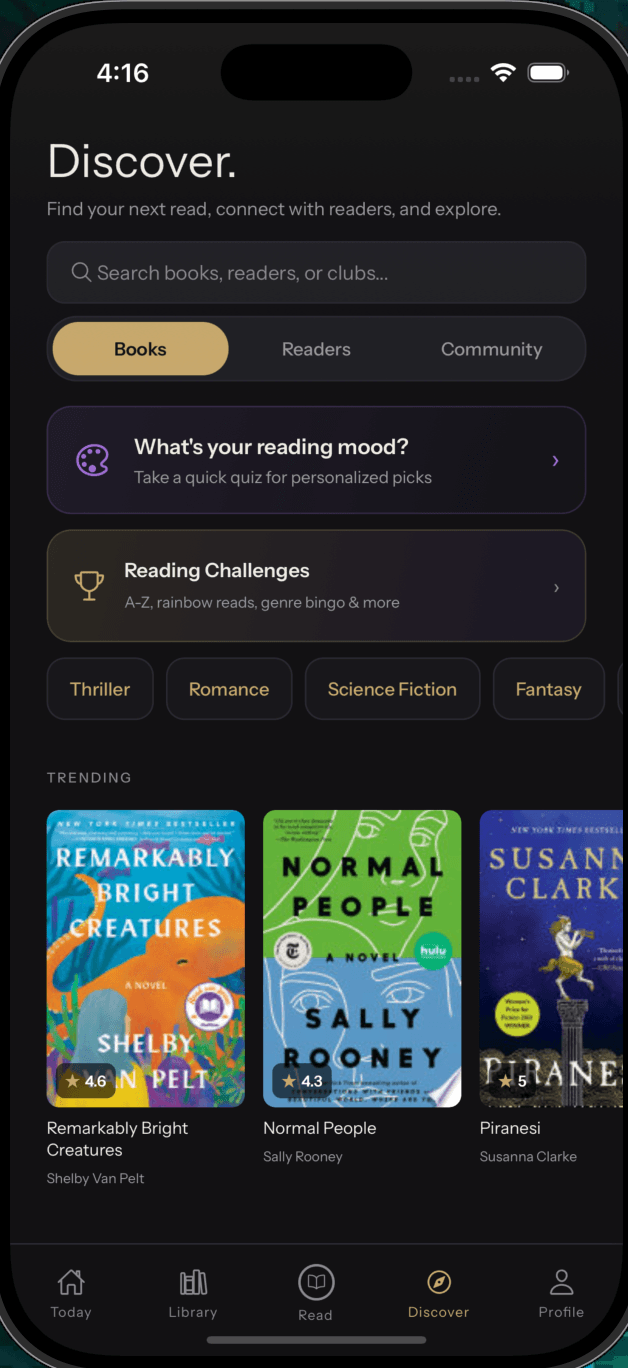
Claritea centers on a simple loop: open a book → start a Focus Session → optional ADHD check-ins and focus sounds → end session → Focus Score and a short, human summary of what shifted in the body.

What I designed and shipped

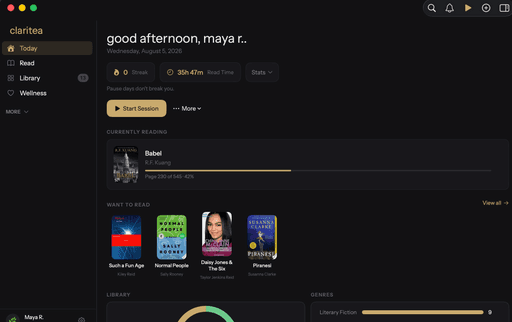
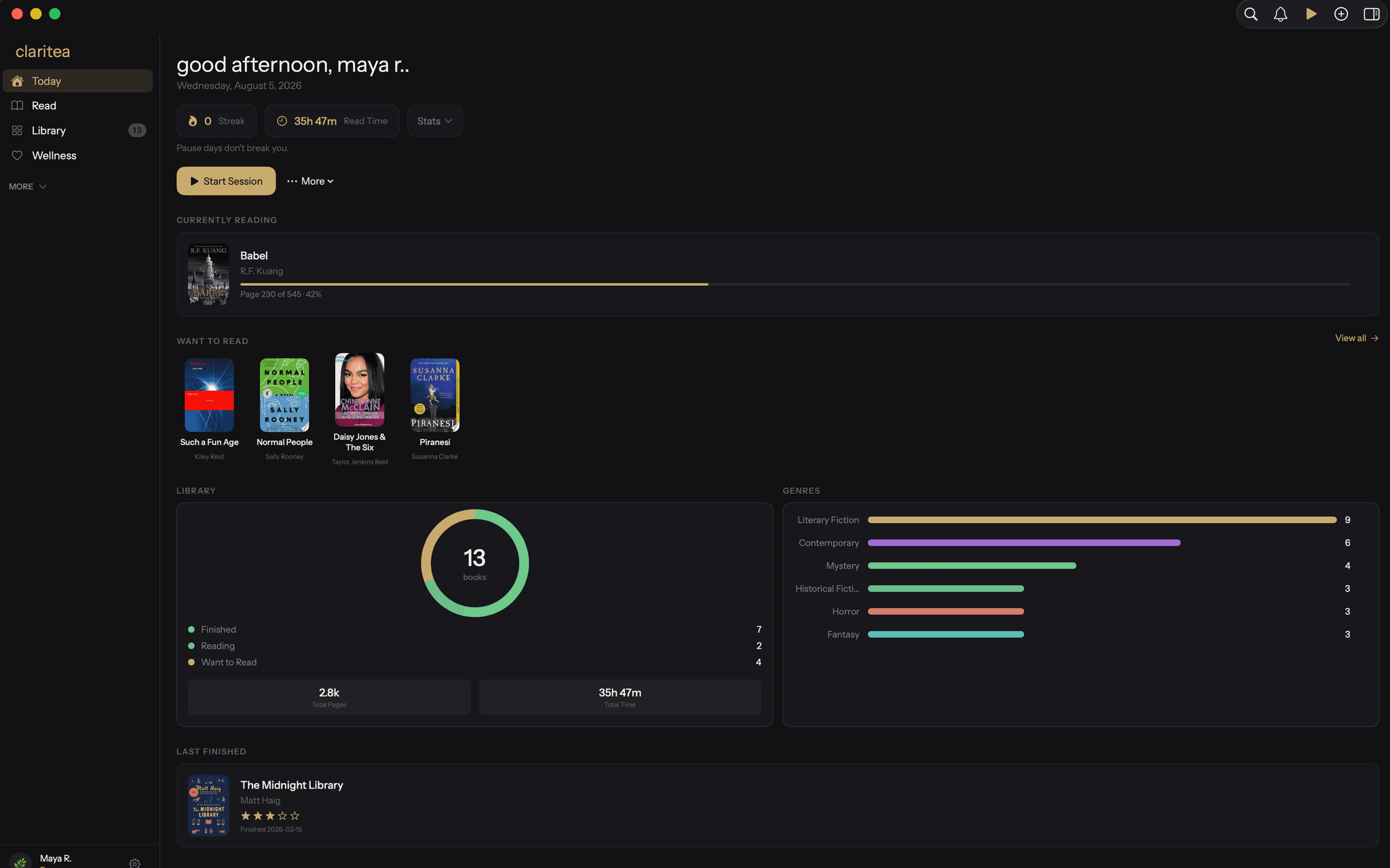
  • Today — Daily home for current read, gentle progress, and wellness context without shame mechanics.

  • Focus Session — Full-screen reading mode with timer, biometric strip, haptic check-ins (“Still with me?”), and soft exits when attention drops.

  • Focus Score — Post-session ring and copy framed as insight, never pass/fail; low scores get context, not judgment.

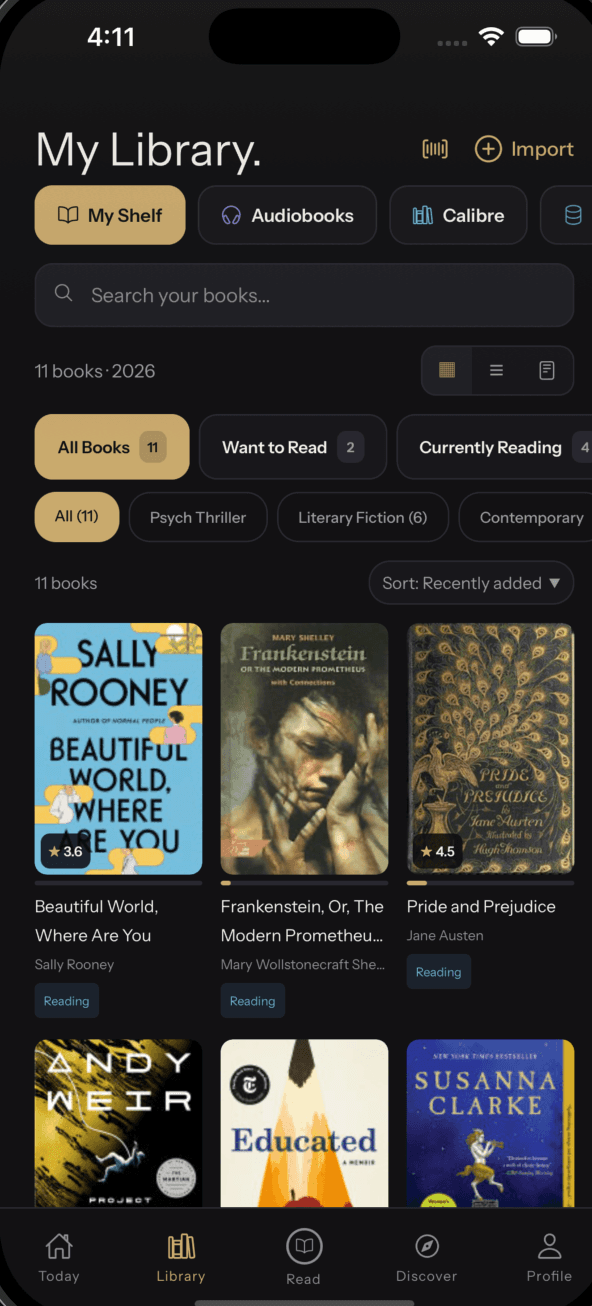
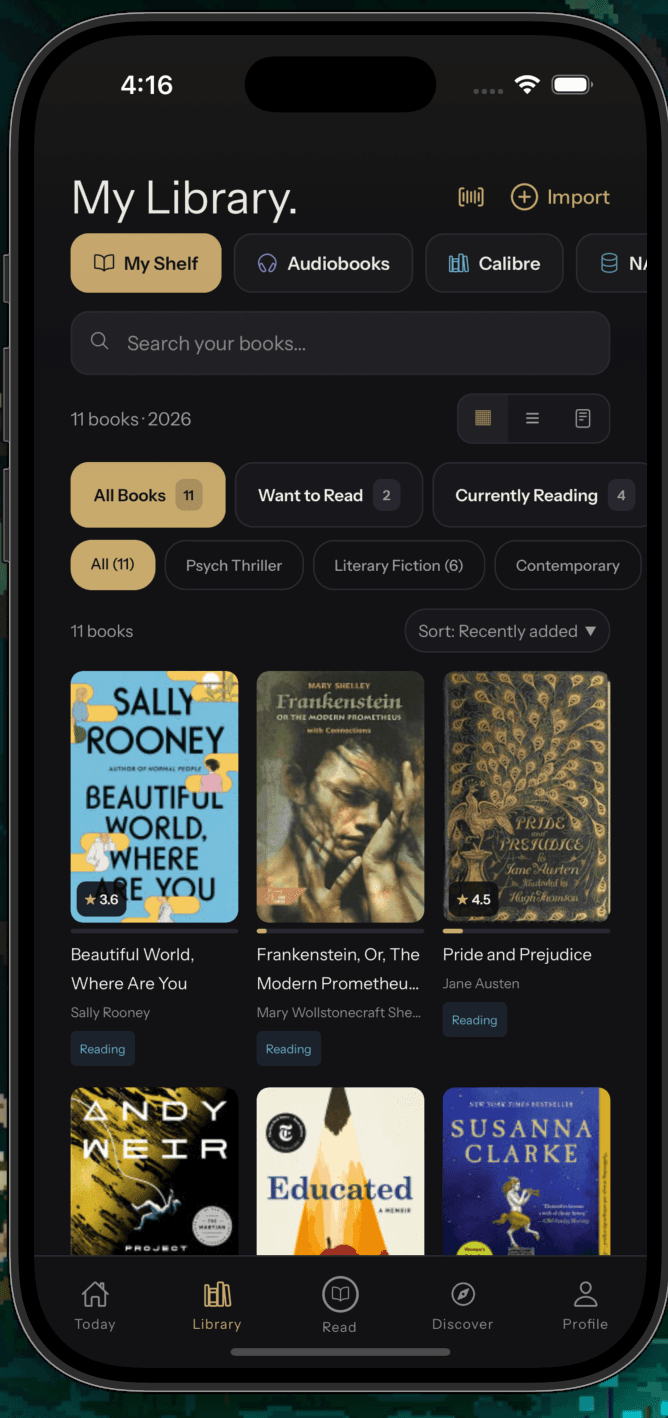
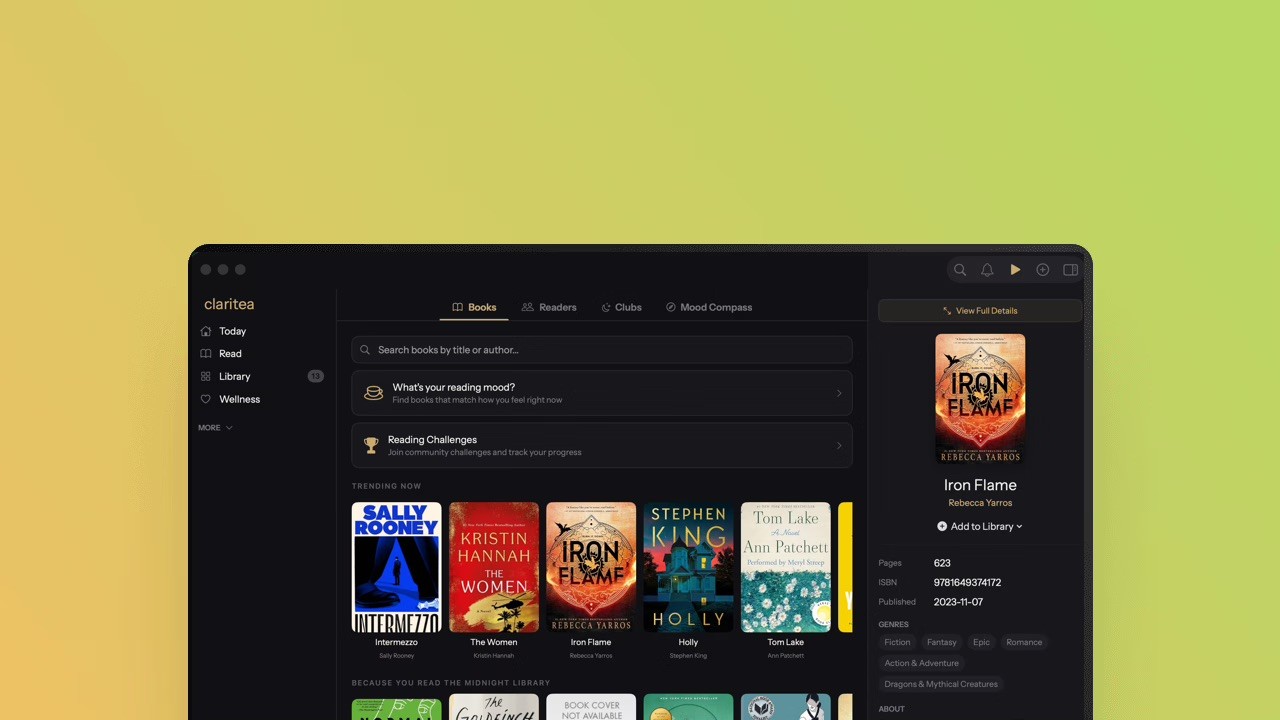
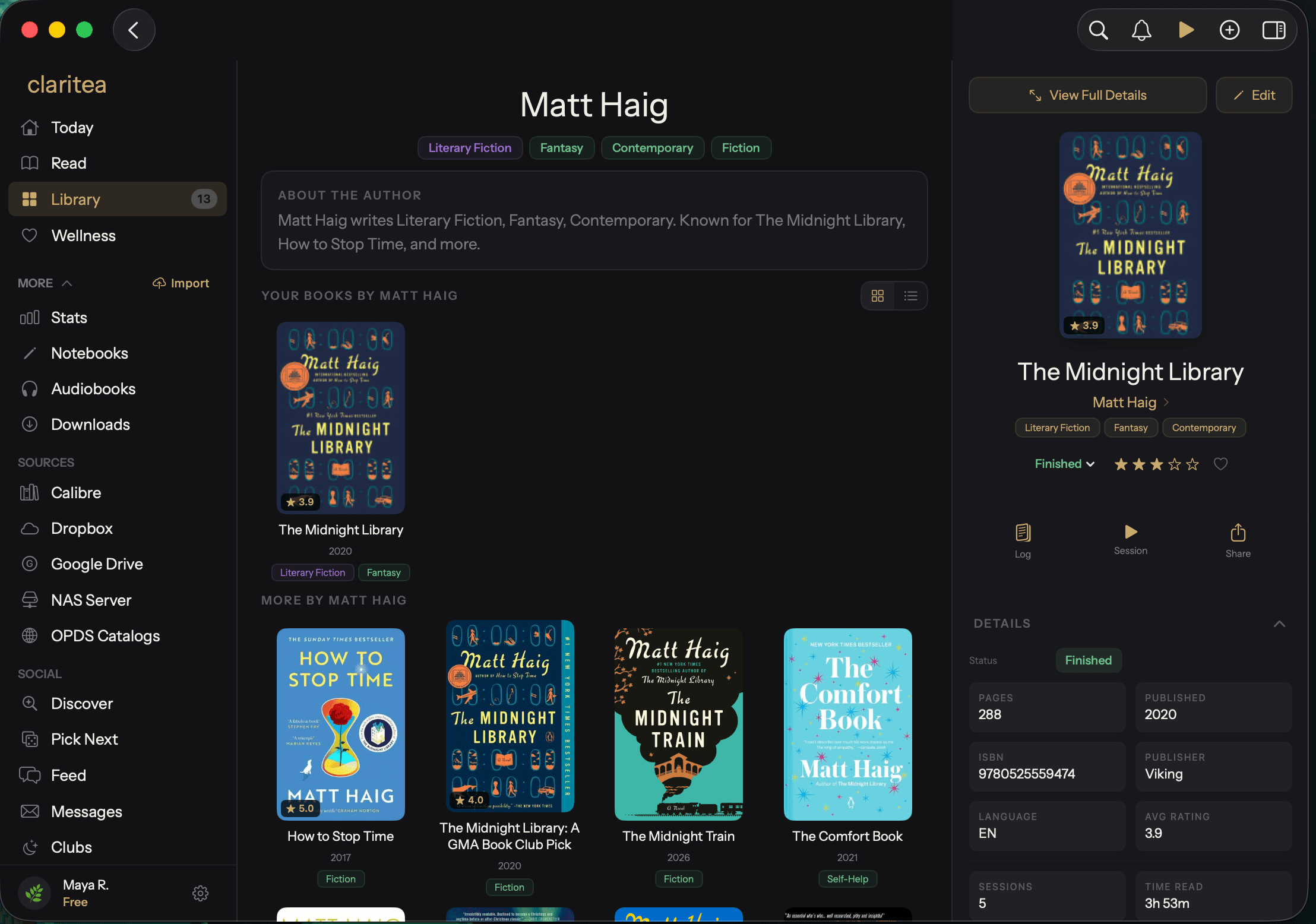
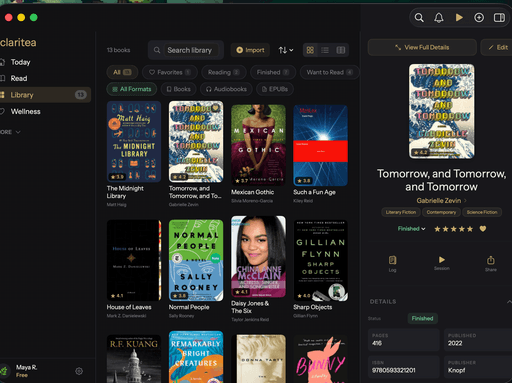
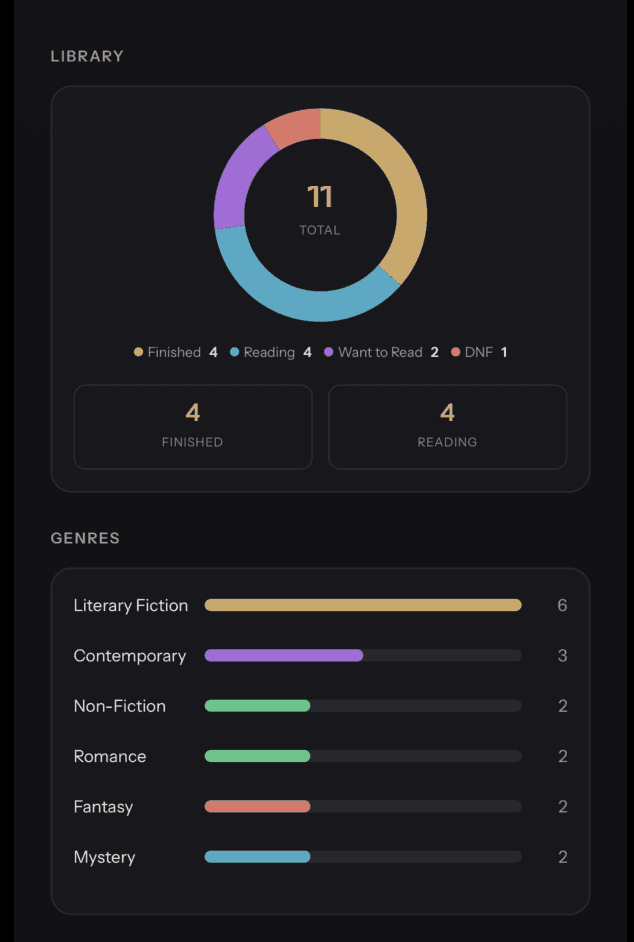
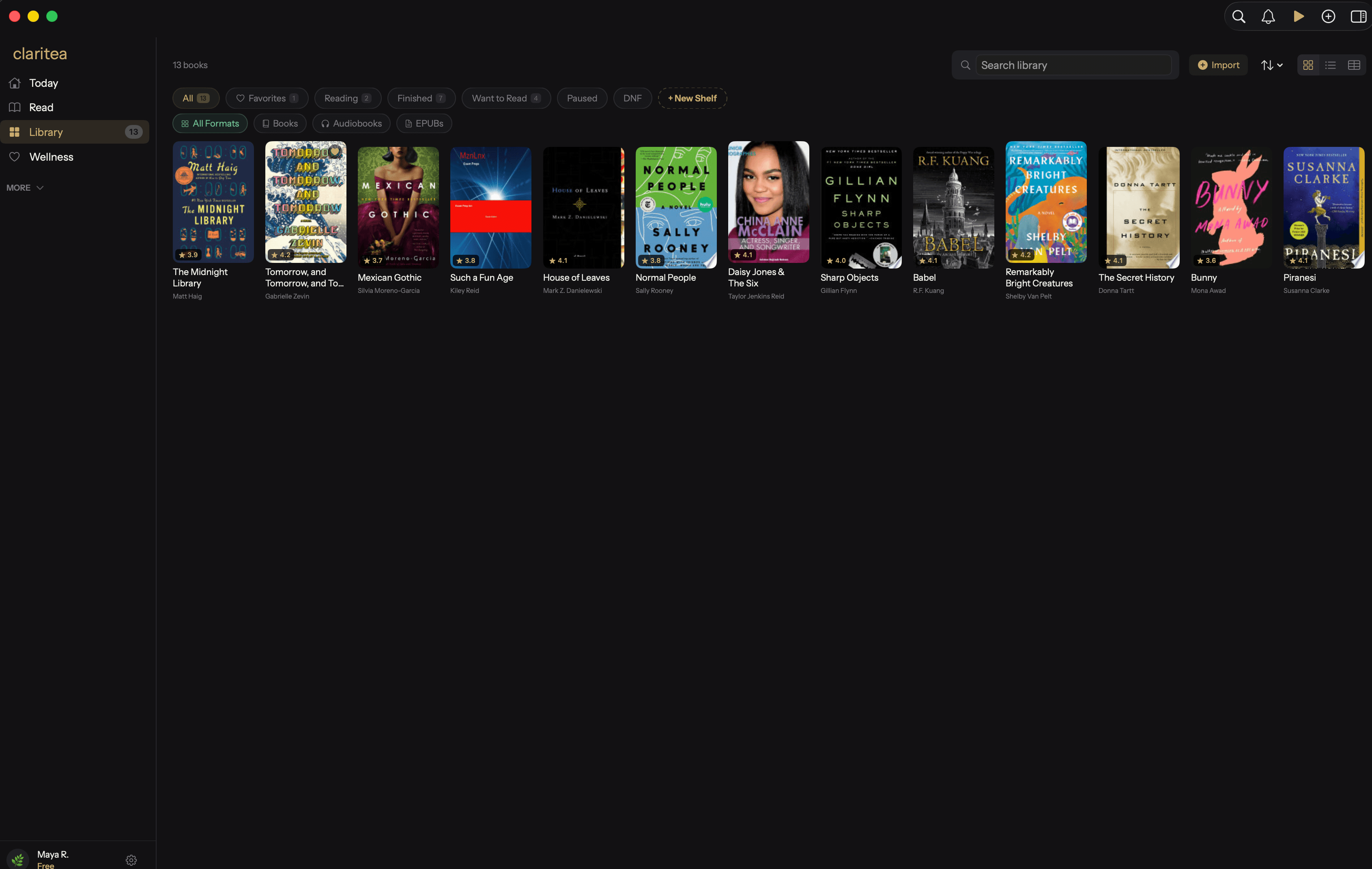
  • Shelf & session history — Library, custom shelves, and a trail of how reading actually felt over time.

  • ADHD-first affordances — Configurable check-ins, pacing, accessibility (dyslexia-friendly type, scaling, reduce motion), and wellness modes that can quiet competitive elements.

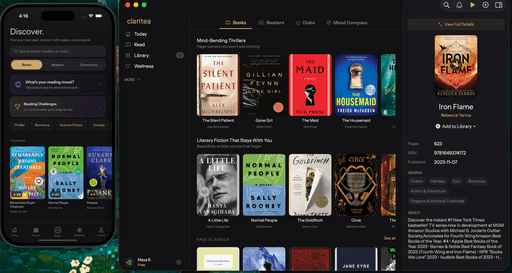
  • Mac companion — Desktop reading management and session support sharing the same account/backend, for people who live on a laptop as much as a phone.

Impact (honest)
This is a founder-built, production-ready personal project—not a launched App Store product with published MAU or clinical outcomes. What I can stand behind:

  • End-to-end product ownership: research → principles → design system → interactive prototype → iOS/Android Expo app, Mac companion, backend, and waitlist marketing.

  • A differentiated positioning competitors don’t occupy: reading as nervous-system care with biometric feedback and ADHD-first session design.

  • A portfolio- and waitlist-ready demo of the core loop (session → Focus Score), with guest/dev gating for honest demos rather than invented engagement metrics.

I am not claiming clinically validated treatment effects or large-scale user stats. The product is built to make that story possible—and to show, in first person, how reading can sit next to meditation in a modern wellness stack.
Claritea

Claritea is a reading wellness app that treats reading as nervous-system care—not a catalog or streak contest. I designed and built it as a personal, production-ready product that connects reading sessions to biometric signals (heart rate, HRV via Apple HealthKit / Health Connect) and turns that into a Focus Score: a clear, humane signal of how reading lands in the body. The experience is ADHD-first—check-ins, pacing, and focus tools that support attention without shame—alongside a Mac companion and waitlist-facing marketing.

Role

UX/UI Design

Role

UX/UI Design

Client

Personal

Client

Personal

Claritea

Claritea is a reading wellness app that treats reading as nervous-system care—not a catalog or streak contest. I designed and built it as a personal, production-ready product that connects reading sessions to biometric signals (heart rate, HRV via Apple HealthKit / Health Connect) and turns that into a Focus Score: a clear, humane signal of how reading lands in the body. The experience is ADHD-first—check-ins, pacing, and focus tools that support attention without shame—alongside a Mac companion and waitlist-facing marketing.

Role

UX/UI Design

Client

Personal